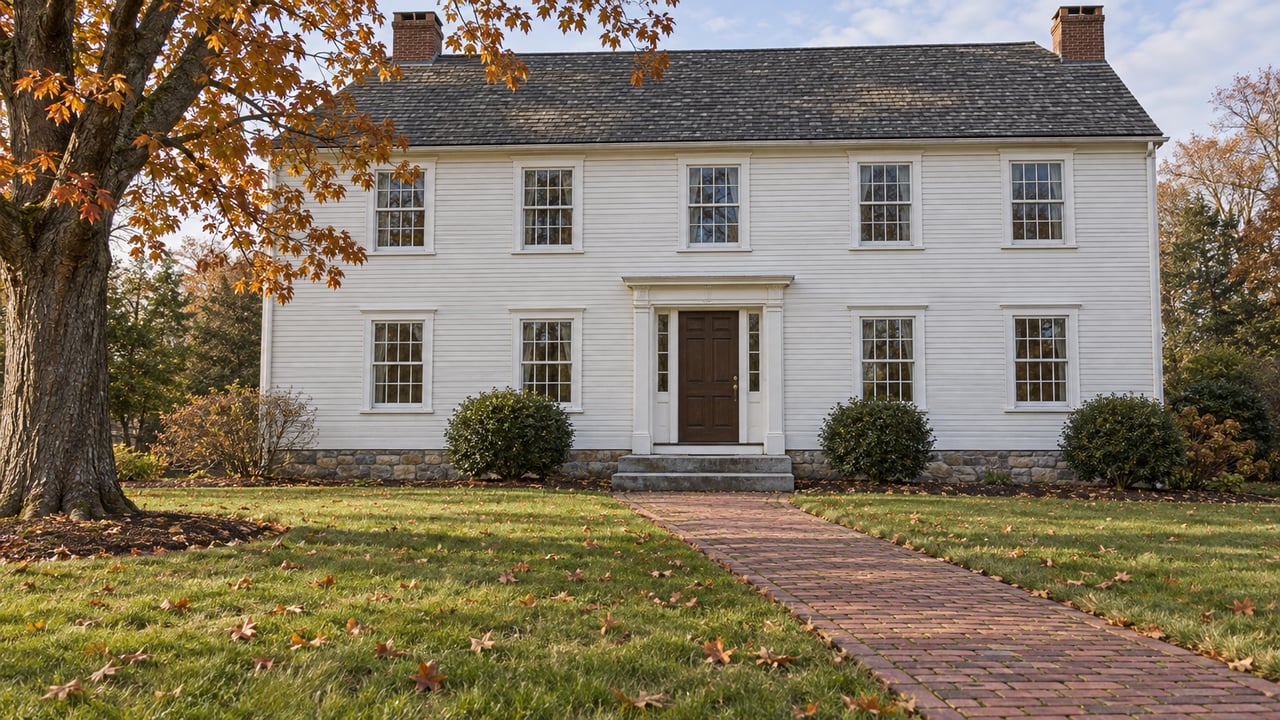
Henry Wick built a Cape Cod–style house around 1750 at the center of a 1,400-acre farm, most of it forest. That made him the largest landowner in Morristown. The trees are why Washington's army came. Soldiers needed logs for cabins and wood to burn for heat and cooking, and during the winter of 1779–1780 they cut down more than 600 acres of Wick's woods, plus more on his neighbors' land.
Jockey Hollow is a park about winter. Morristown Green calls the encampment ground "the Harding fields where Washington's troops spent the hardest winter of the Revolution." The park's New Jersey Brigade area sits on Jockey Hollow Road in Bernardsville. The National Park Service closes every building in Morristown National Historical Park from January 4 through February 12, 2027, which is the deepest stretch of the season the place commemorates. So this winter falls into two parts. The indoor story is only available for the next several weeks. After that, the visit is the grounds and the trails, and they hold up well without the buildings.
Now through Jan. 3: the weeks with the doors open
According to the park's operating hours page, last updated November 2, 2026, the Jockey Hollow Visitor Center at 586 Tempe Wick Road is open Thursday through Monday from 9:30 a.m. to 4:30 p.m. Park buildings are closed Tuesdays and Wednesdays. The Wick House is also open Thursday through Monday, but the park says its hours vary and asks visitors to call the Visitor Center at 973-543-4030 on the day they plan to come.
The holidays take three more days off the calendar. Park buildings close on Thanksgiving Day, November 26, on Christmas Day and on January 1. Once you take out the Tuesdays, Wednesdays and holidays, the window before January 4 is about five weeks of open days. Late-November and December weekends are when visiting relatives are around and someone wants a reason to get out of the house.
The two buildings are worth the timing. The Visitor Center is a mid-1970s building with a large mural of the 1779–1780 encampment, a full-scale model of a soldier's log cabin, a short film, a gift shop, and an information desk staffed by a park ranger. The full-size hut model is the best preparation for the replica huts up the hill. You see the inside first and the outside second.
The Wick House is furnished to portray its use as a general's headquarters. Major General Arthur St. Clair, who commanded 2,000 Pennsylvania soldiers, made his quarters in Henry Wick's home that winter. The National Park Service announced federally funded exterior repairs to the Wick barn in a September 2024 release. The Friends of Jockey Hollow have also paid to replace the fence around the Wick Garden.
Early January: the second winter the park wants to interpret
The Hard Winter of 1779–1780 is the one most people know. The Pennsylvania soldiers stationed at Jockey Hollow lived through another. In early 1781, according to the Friends of Jockey Hollow, the Pennsylvania Line faced a cold winter, poor housing and shortages of food and supplies. The soldiers revolted, demanding better conditions and the pay promised in their enlistment contracts, and their demands were met.
The National Park Service and the Friends of Jockey Hollow are developing a trail to tell that story. The proposed Penn Line Mutiny Trail would run about 0.33 miles through upland forest on a natural-surface path. For the first time, it would connect the Bettin Oak Monument to the former site of the Fort Hill redoubt by way of the existing White Trail. The project is still in planning. The park took public comment on the preliminary scope in 2025, and the next phase is review under the National Environmental Policy Act and related preservation and resource laws. The public will get another chance to comment once the park releases its preliminary NEPA document.
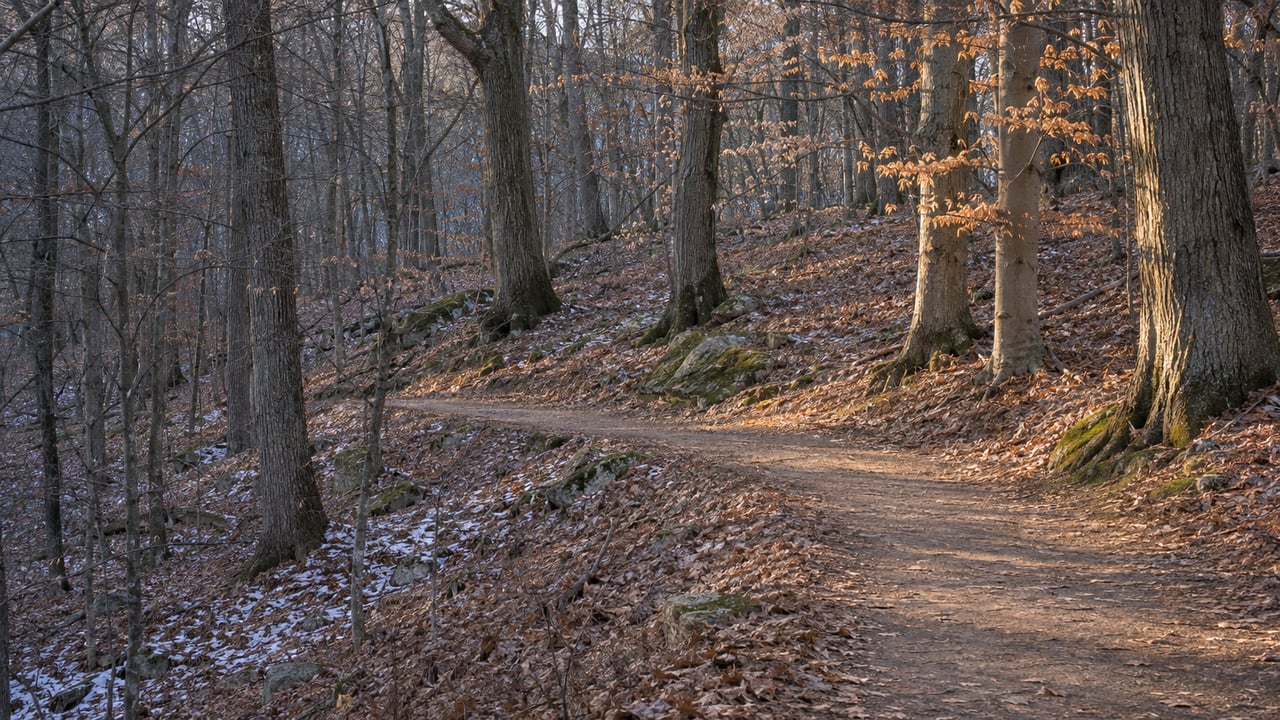
According to Morristown Green's April 2026 report, a year-long archaeological investigation came before planning began, and that spring's America 250 encampment included guided hikes to the Mutiny monument. For now, a walk on the White Trail in early January passes through the ground the proposed trail would interpret, in the same season the mutiny happened.
Jan. 4 to Feb. 12: grounds only
During the six-week closure, the grounds stay open daily from sunrise to sunset. The park leaves two sets of restrooms available: the exterior doors of the Jockey Hollow Visitor Center and the New York Brigade Comfort Station. If you start from the New Jersey Brigade and Cross Estate Gardens area at 61 Jockey Hollow Road, plan accordingly, because that area has no public restrooms in any season.
The park says snow, ice, tree removal or road work can cause unplanned closures or late openings, and it posts current alerts on its conditions page. On a snowy morning, check the alerts page before you drive over.
With the buildings dark, the trail map does the work the mural and the film did. The NPS trail map points to the Yellow Trail as the closest route to the soldier-hut replicas, which stand on the hill where the original huts stood. The park's brochure lists approximate lengths for each blazed route:
| Trail | Approx. length | What the park points to |
|---|---|---|
| White, Grand Loop | 6.5 miles | Pond |
| Blue | 3 miles | Scenic view, pond |
| Yellow | 2.25 miles | Soldier-hut replicas |
| Green | 1.5 miles | Streams and springs |
| Teal | 1.35 miles | |
| Red | 1.13 miles | Streams and springs |
| Orange | 1.0 mile | |
| New Jersey Brigade | 0.7 miles | Passaic River area |
The descriptions in the third column come from the NPS trail map. With the grounds closing at sunset during the shutdown weeks, the 2.25-mile Yellow Trail and the 6.5-mile Grand Loop are very different commitments on a January afternoon.
Some of the best encampment details are about the landscape, and they don't need an open building. The Grand Parade was an open field 400 yards long and 100 yards wide. A two-room log cabin there was the camp's administrative center, where orders were issued and courts-martial held, and two cannon stood by as alarm guns. The Guerin House shows how closely the camp pressed on its neighbors. Joshua Guerin, a sergeant in the Morris County militia, worked a 76-acre farm there. He grazed army horses in his pasture, sold hay and firewood to the army, hauled supplies in his wagon, and briefly had soldiers quartered in his house. The Guerin House is a park staff residence and is not open to the public, so look at it from the path.
The buildings reopen after February 12. Washington's Birthday, February 15, 2027, is listed with regular 9:30 a.m. to 4:30 p.m. hours.
Why the grounds stay open: the Friends of Jockey Hollow
During the closure, the grounds stay walkable partly because of the Friends of Jockey Hollow. The group says Jockey Hollow has 27 miles of trails and about 332,036 recreational visitors a year. Every spring it upgrades sections of trail that wash out or get overgrown with invasive species. Working with the NY-NJ Trail Conference, it has bought $7,000 worth of lumber for water bars, puncheons and check dams. After emerald ash borer forced the removal of more than 120 ash trees in 2023, the Friends worked with Fullerton Grounds Maintenance to help the park clear the stumps and debris. Some of that work is easiest to see in winter, when the leaves are down.
The group's role grew in fall 2025. Morristown Green reported that the Friends temporarily paid park operating costs during the federal shutdown so Jockey Hollow could stay open through at least November 30, 2025. In Morristown Green's April 2026 coverage, a Friends representative said park staffing had fallen from about 25 full-time employees around 2000 to 15 by the time the group became involved. The same story described a major Visitor Center overhaul in early planning, with the restrooms already redone. The Friends' $2.5 million America 250 campaign, whose public phase began in September 2025, builds on earlier gifts that paid for trail restoration, the Wick Garden fence and the renovated New York Brigade comfort station. That comfort station is one of the two restroom options during the six-week closure.
The park's calendar page is the place to check for anything scheduled at Jockey Hollow between now and spring. For the rest of Harding's slower-season routine, our fall Saturday in Harding Township covers the town's other small institutions, and our Harding Township neighborhood page has more on the area around the park.
If you're weighing a home near Jockey Hollow, or wondering what a house close to the park is worth, Margy and Denise are glad to talk it through. Reach out to The DeFazio Flanagan Team for a personalized valuation and neighborhood consultation.